
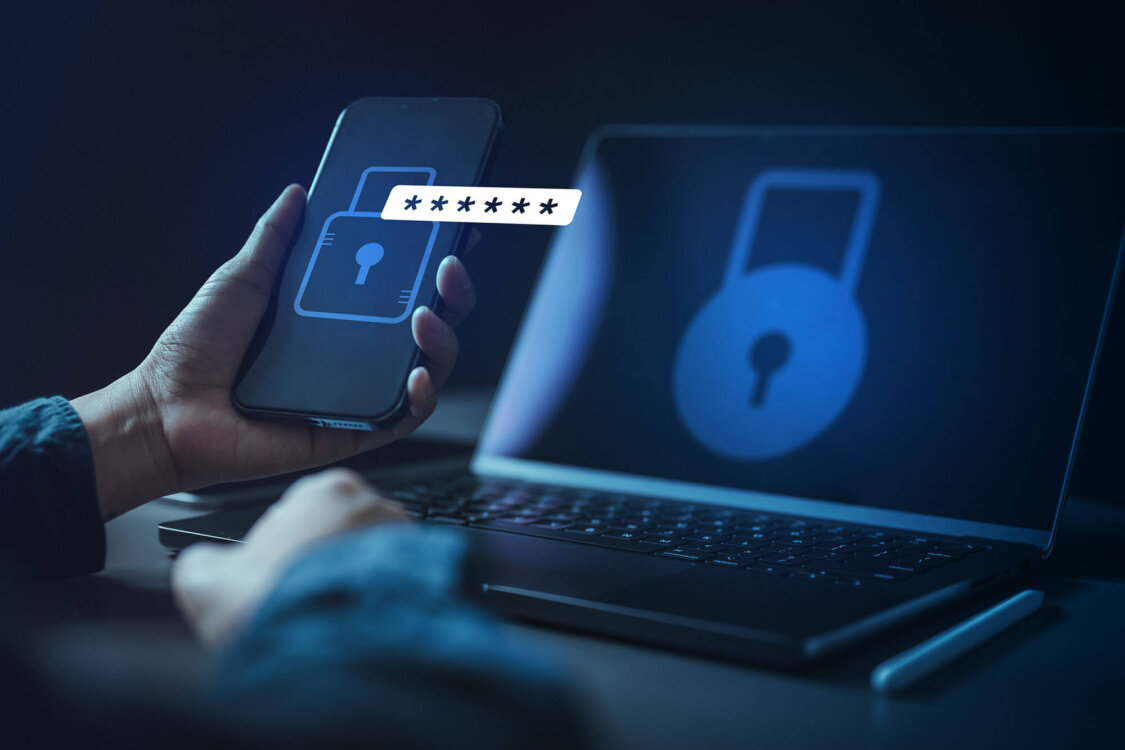
If you’re still using text messages for login security, it’s time to reconsider.
In late 2024 and into 2025, both the FBI and the Cybersecurity and Infrastructure Security Agency issued guidance urging organizations and users to stop relying on SMS-based MFA because it’s vulnerable to interception and phishing. Security vendors and enterprises also started phasing out SMS in favor of stronger, phishing-resistant authentication, making the shift away from text codes clearer as a multi-year trend rather than a one-off product change.
Recently, we helped a client untangle a breach. They had MFA turned on, but it was text-based. And that attacker? They didn’t guess a password. They just intercepted the code.
So if you’re still relying on SMS to protect sensitive accounts—especially anything tied to finance, operations, or communications—this is your signal. Because in 2026, SMS MFA security risks aren’t theoretical anymore.
Why SMS-Based MFA Is No Longer Recommended
Let’s start here: SMS messages aren’t encrypted. Anyone who gains control of your phone number—through SIM swapping, malware, or telecom fraud—can read them.
I mentioned FBI and CISA guidance earlier, but it’s not just policy folks making noise. In early 2025, Google announced it’s ditching SMS codes for Gmail, replacing them with QR-based login methods to curb fraud and traffic pumping scams. Microsoft followed suit, tightening its own guidance and mandating phishing-resistant MFA for admin accounts.
The message is clear: SMS is not secure enough.
Best Alternatives to SMS MFA for Business Accounts
It depends on your environment, but here’s where we steer most of our clients when they ask about authentication best practices in 2026:
1. Use phishing-resistant MFA.
Tools like hardware security keys (YubiKeys, for example) or device-bound authenticators are dramatically more secure. They tie your credentials to your physical device, not a phone number. Even if someone tricks a user into visiting a fake login page, the credential won’t transfer.
2. App-based authenticators.
If hardware keys aren’t realistic everywhere, app-based authenticators are still a meaningful step up from SMS.
They aren’t perfect, but they remove the phone-number problem and reduce exposure to SIM-swap attacks. Pair them with device checks and sign-in monitoring so you’re not relying on a single factor alone.
3. Understand what your MFA actually protects.
Some tools protect logins. Others protect actions. Some cover cloud apps but not VPNs, legacy systems, or third-party platforms.
If you don’t know where MFA is enforced—and where it isn’t—you’re guessing. Attackers don’t guess. They look for the gap.
4. Train the people who handle access.
Even strong authentication can fall apart under social pressure.
We still see assistants, bookkeepers, and operations staff getting talked into “just reading off the code” by someone impersonating a vendor or executive.
Short, role-specific training goes a long way here: when to slow down, what never gets shared, and who to call when something feels off.
Passkeys vs SMS MFA: Why Passkeys Win
Passkeys—biometric logins that don’t rely on passwords or codes—are now supported by Apple, Google, and Microsoft. They’re simple to use, nearly impossible to phish, and already built into most devices.
They also solve some of the everyday problems people have with SMS:
Passkeys—biometric logins that don’t rely on passwords or codes—are now supported by Apple, Google, and Microsoft. They’re simple to use, nearly impossible to phish, and already built into most devices.
They also solve some of the everyday problems people have with SMS:
No roaming issues when traveling
No delays from carriers
No codes to forward or mistype
They’re not right for every legacy system yet, but for modern cloud platforms, there’s little reason to stick with SMS when passkeys are available.
How to Phase Out SMS MFA Without Breaking Workflows
You don’t need to rip everything out at once. But you do need a plan.
A practical first step:
Identify which accounts still rely on SMS
Prioritize anything tied to money movement, admin access, or sensitive data
Replace SMS there first with phishing-resistant MFA or passkeys
Set a timeline to phase SMS out everywhere else
At Decypher, we help clients map authentication across their full environment: remote work, mobile access, executive devices, family offices, and third-party apps.
If you’re not sure what’s still exposed, or whether your MFA would stop the most common attacks we see in 2026, we’re happy to walk through it with you.
Reach out here to schedule a private consultation.
